Fax
Familiar and widely available, but the workflow around confirmation, follow-up, and reconstruction is often manual.

The practical difference is not whether a document can leave one organization. It is how much visibility, acknowledgment, and audit context remain after it does.
This comparison focuses on general workflow characteristics rather than claiming every product in a category behaves the same way.
| Workflow need | Health Record Relay | Fax | Generic secure file sharing |
|---|---|---|---|
| Track delivery status | Built in | Limited | Varies |
| Recipient acknowledgment | Built into workflow | Not typical | Varies |
| Healthcare-focused audit history | Yes | Limited | Generic activity logs may exist |
| Delivery expiration controls | Yes | Not applicable | Often available |
| Patient consent workflow | Supported when needed | Manual | Usually separate |
| Designed around cross-organization medical record handoff | Yes | Transmission only | General-purpose |
Fax can produce a transmission result, but healthcare staff often still need to determine whether the right person received the records, whether they were accessed, and what happened next.
Familiar and widely available, but the workflow around confirmation, follow-up, and reconstruction is often manual.
Useful for protected file delivery in many contexts, but not necessarily designed around healthcare record handoff, patient authorization, or transfer-specific audit needs.
Focused on the operational moment when one healthcare organization needs to send records to another and keep visibility into the handoff.
The strongest use case is a workflow where staff repeatedly fax, refax, call, and document the handoff manually because they lack clear delivery visibility.
That makes a focused pilot useful: choose the workflow, establish a baseline, and compare the operational results.
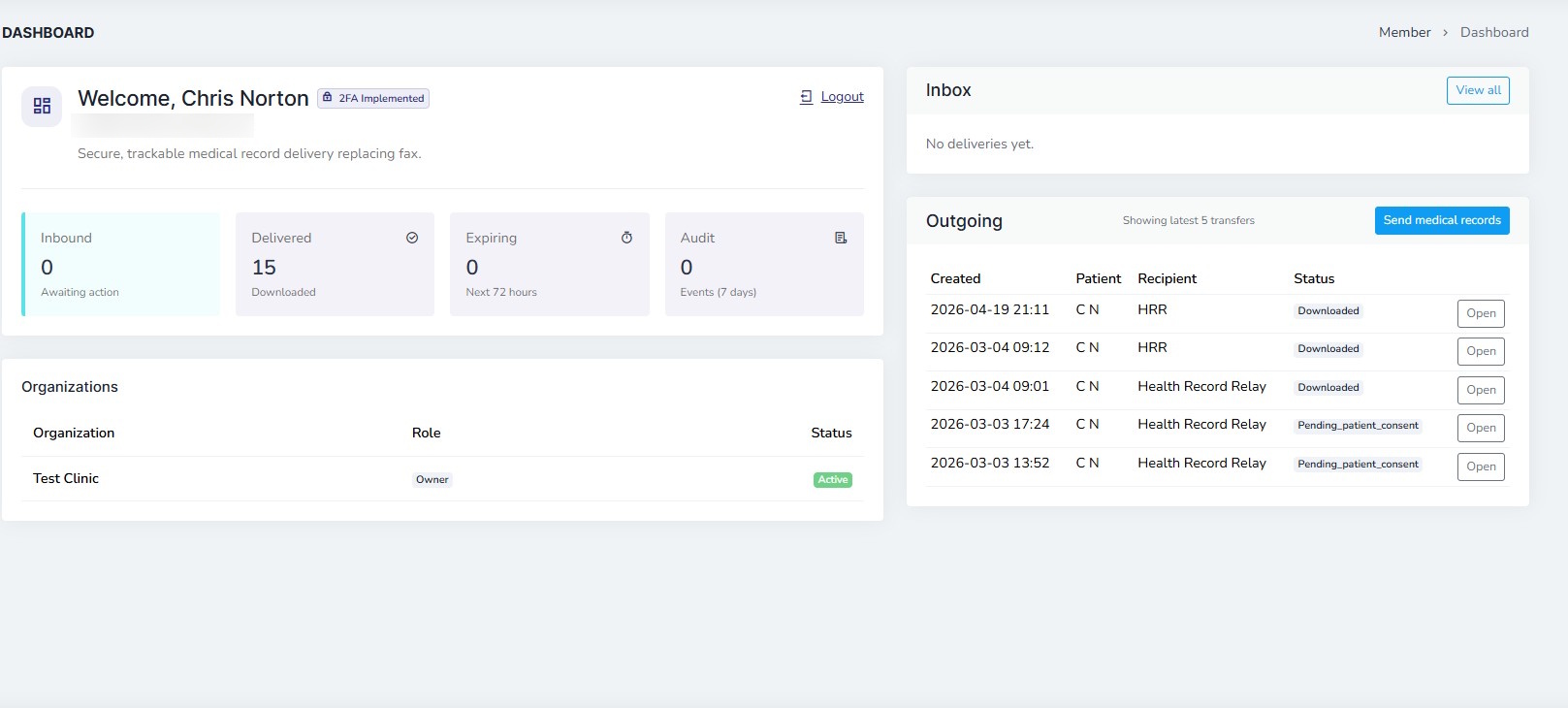 Track the
workflow
A focused pilot gives your team a practical way to test secure, trackable record delivery without committing to a large implementation project.